
Breakroom basics small upgrades that improve employee experience
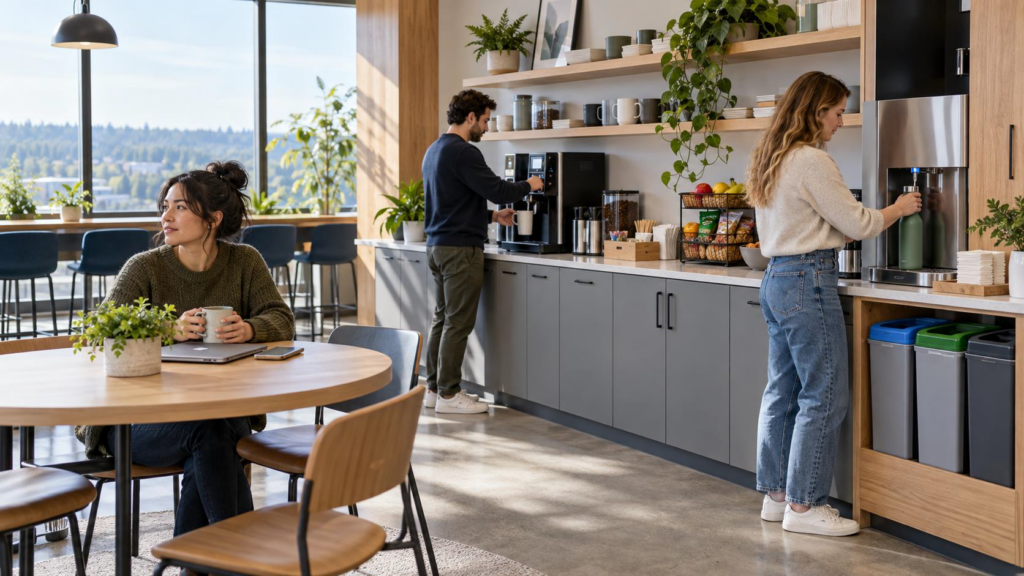
Employees notice the breakroom when something is missing. The coffee runs out. The water filter needs attention. The only snack option does not work for many people. The table becomes a storage surface, and the trash area is hard to use without making a mess.
These problems are small, but they repeat. Each one adds friction to a part of the day that should give employees a brief reset. A few well-chosen changes can make the room more comfortable and easier to maintain without replacing cabinets or buying a premium appliance package.
Start with how people use the space. Watch where lines form, what runs out first, which surfaces collect clutter, and what employees carry in from elsewhere. That will tell you more than a generic list of breakroom trends.
Make water easy to find and refill
Drinking water should be easy to access without moving around coffee supplies, dirty dishes, or food preparation. A filtered dispenser or bottle-filling tap can give employees a quick refill point and reduce the need for individual bottled water.
Leave enough counter space to set down a bottle. Keep cups nearby for visitors and employees who do not carry one. If the dispenser uses a replaceable filter, assign responsibility for the replacement schedule and keep the correct filter information with the facilities records.
Small details affect use. A dispenser that fills slowly, splashes the counter, or sits behind other equipment will frustrate people. Choose equipment that fits the available plumbing, electrical access, counter depth, and expected daily volume.
Give the beverage station a clear layout
Coffee may be the busiest part of the breakroom, but the station should also work for people who prefer tea, decaf, or hot water. Keep the choices focused and replenish the favorites consistently.
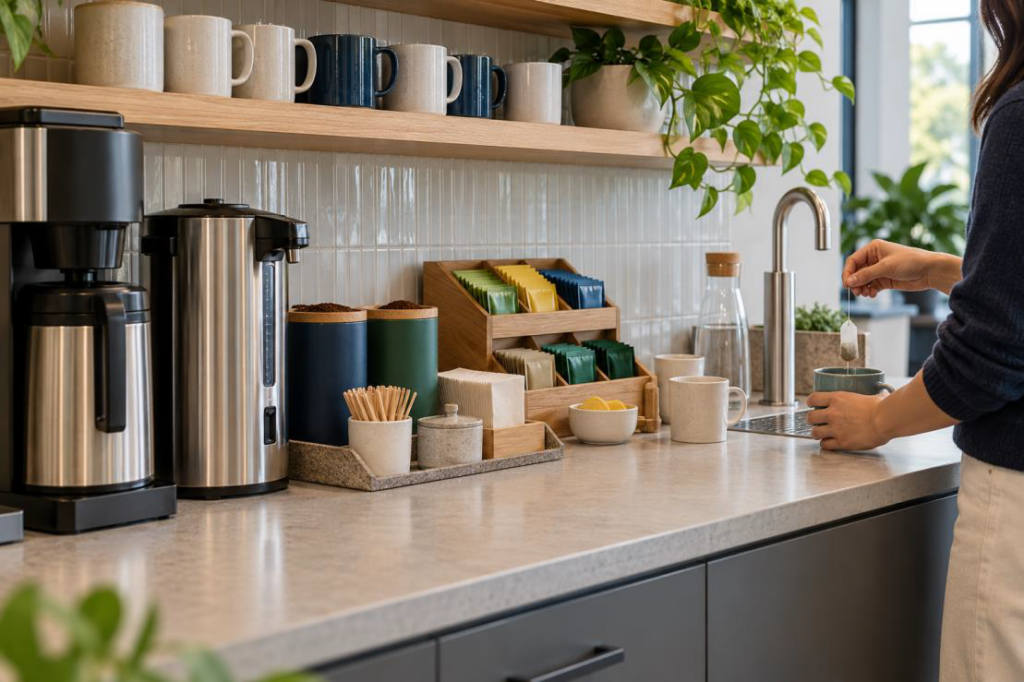
Arrange supplies in the order people use them. Place mugs and cups near the machine, followed by coffee or tea, then sweeteners, creamers, stirrers, and napkins. Leave a clear section of counter for preparation. This reduces reaching across other people and keeps spills away from the supply containers.
Use different container colors or shapes to distinguish regular and decaf products. Keep ingredient information available for creamers and flavored products. If milk or other refrigerated items are offered, check dates and refrigerator temperature as part of the stocking routine.
Reusable mugs can reduce disposable cup use when the breakroom has a practical way to wash and store them. Keep some disposable cups for visitors and other situations where reusables are not workable.
Offer a modest range of food choices
A larger snack display does not always create a better breakroom. A smaller mix that reflects what employees eat is easier to stock and less likely to create waste.
Include a few types of choices rather than many versions of the same product. Whole fruit, nuts or seed-based options, savory snacks, and a small selection of lower-sugar items can cover more preferences than one shelf of sweets. Ask employees what they use before adding a recurring order.
Keep packaged-food ingredient information visible. Store products with common allergens in a way that reduces accidental mixing, and avoid presenting the breakroom as allergen-free unless the workplace has procedures that can support that claim.
Review consumption for several weeks. Remove products that expire or remain untouched. Put the most frequently used items within easy reach and rotate older stock forward when new supplies arrive.
Make cleanup the easiest option
A clean breakroom depends on supplies and placement. People are more likely to wipe a spill when paper towels or cleaning cloths are close by. They are more likely to sort waste correctly when bins are easy to reach and the openings make sense for the items being discarded.
Keep dish soap, hand soap, paper towels, surface cleaner, and replacement trash liners in assigned locations. Store cleaning chemicals away from food and follow the product instructions. Avoid filling the counter with spare supplies. A nearby cabinet or lower shelf keeps refills available without crowding the working area.
Set a simple ownership routine. Facilities may handle scheduled cleaning, while employees deal with personal dishes and immediate spills. Spell out that division so one group does not assume the other will take care of everything.
Check the overlooked areas during regular cleaning. Microwave interiors, refrigerator handles, cabinet pulls, drip trays, and the floor around waste bins tend to show use quickly.
Improve the places where people sit
Employees use breakrooms in different ways. Some want a short coffee break with a coworker. Others need a quiet lunch or a place to step away from their desk. One seating type rarely supports every use.
If space allows, combine a standard-height table with a small counter or perch area. Choose chairs that can be wiped clean and moved without difficulty. Leave enough clearance for people to pass behind occupied seats and for employees using mobility devices to approach the table and appliances.
Noise matters in a small room. Chair glides, soft seating fabric, acoustic panels, and felt-backed accessories can reduce hard-surface noise. Start with the source of the sound before adding decoration.
Power outlets can be useful, but they may encourage employees to turn the breakroom into another workstation. Place charging access where it will not create cords across walkways or block food preparation.
Organize supplies around daily use
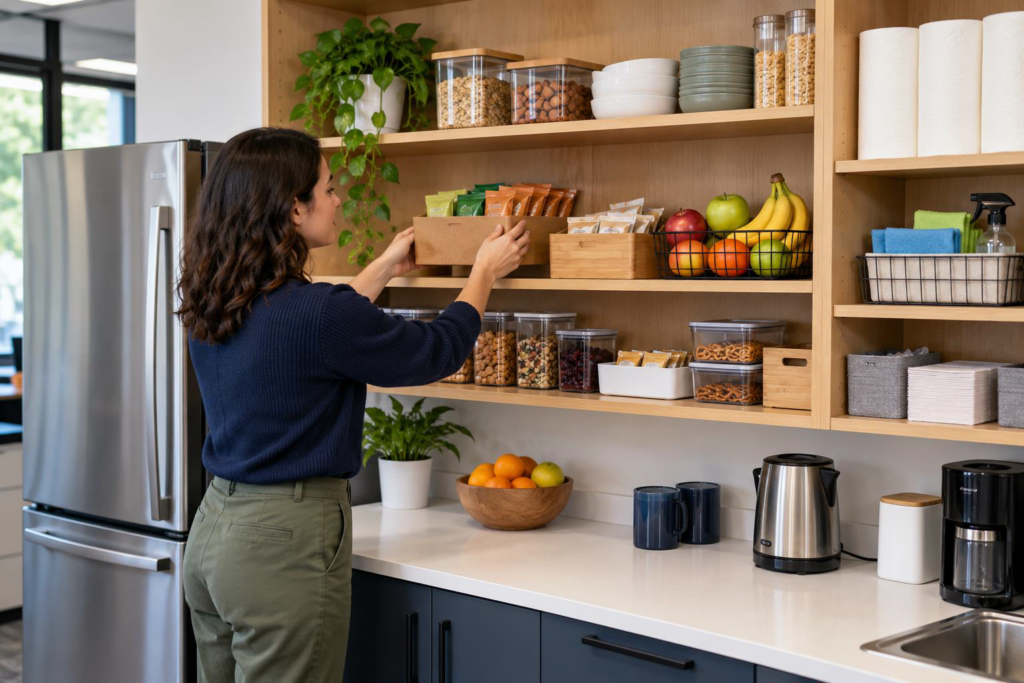
Open shelves and clear containers can make stock levels easier to see, but every container adds cleaning work. Use them for products that move quickly and can be transferred safely. Keep the original ingredient and date information when food is removed from its package.
Divide cabinets into practical zones such as beverages, food, serving items, cleaning supplies, and backup stock. Store heavy products between knee and shoulder height when possible. Keep frequently used items closer than occasional event supplies.
Avoid buying deep quantities without checking storage space and product life. A discount is lost when food expires, paper goods block the floor, or employees cannot reach the items behind a large delivery.
Set a minimum stock level for the products that cause the most disruption when they run out. Coffee, filters, cups, paper towels, trash liners, and dish soap are common examples. Review those items on a set day each week and place one planned order instead of several emergency orders.
Choose products that fit the room
Before buying equipment or supplies, measure the counter, cabinets, doorways, and electrical clearance. Confirm whether appliances need a dedicated circuit, plumbing connection, drain, or ventilation space.
Match pack sizes to the number of employees and the available storage. A small office may waste less with individually wrapped products that stay fresh longer. A larger team may reduce packaging and restocking work with bulk formats and dispensers.
Think about how the product will be cleaned and serviced. A coffee machine with a difficult cleaning cycle will not stay appealing for long. A water dispenser is useful only when filters and service are easy to obtain. Replacement parts and routine maintenance belong in the buying decision.
Ask employees what they use
A short survey can prevent expensive guessing. Ask which drinks employees use, what is often missing, and what would make the room easier to use. Keep the questions tied to choices the business is prepared to act on.
Usage gives the second half of the answer. Review reorder frequency, waste, and employee requests after a change. A popular item should run down at a predictable rate. A product that expires repeatedly should leave the standard order.
Post the contact or ordering route for breakroom issues in a place employees already use, such as the company service portal or workplace guide. Avoid handwritten signs that linger after the process changes.
Start with three fixes employees will notice
Walk through the breakroom at a busy time and choose three problems that occur often. One office may need reliable filtered water, a better coffee layout, and a weekly restocking check. Another may need clear counters, easier waste sorting, and seating that is easier to move.
Keeney’s supplies coffee, snacks, kitchen products, paper goods, cleaning items, and other workplace essentials for Puget Sound organizations. A Keeney’s specialist can help review what the breakroom uses, set up recurring orders, and combine the supplies with other workplace purchases.
Ready to improve your breakroom? Talk with a Keeney’s specialist
Breakroom review checklist
• Is drinking water easy to reach and refill?
• Are coffee, tea, decaf, and hot water supplies arranged in a logical order?
• Does the food selection reflect employee use without creating frequent waste?
• Are ingredient details available and common allergens stored carefully?
• Are cleanup supplies close to the areas where spills happen?
• Are food and cleaning products stored separately?
• Can employees of different heights and mobility levels reach the main items?
• Is seating comfortable, cleanable, and easy to move?
• Are popular items reviewed and reordered on a set schedule?
• Does one person or team have replenishment and service issues?